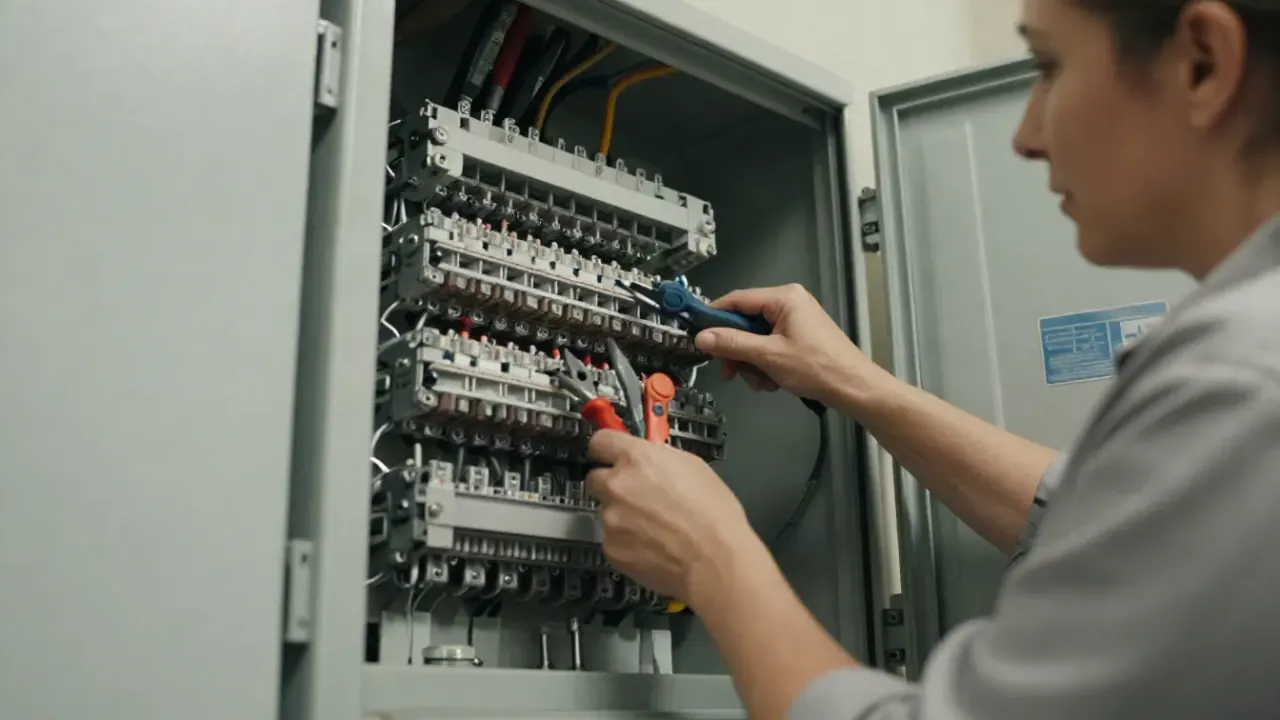
7 Signs Your Georgia Home Needs an Electrical Panel Upgrade
Flickering lights, warm breaker panels, and 60-amp service are three of the seven signs your Georgia home needs an electrical panel upgrade. Here's how to tell.
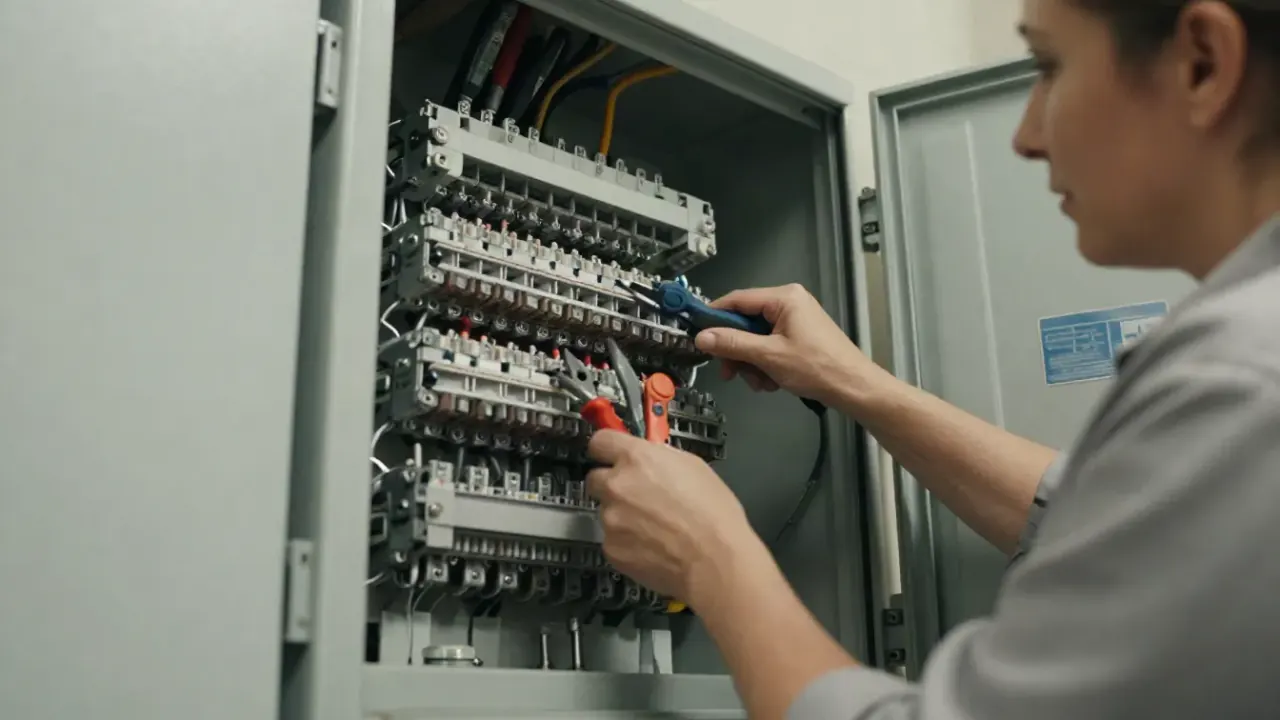
If your breakers trip every time the microwave and the hair dryer run together, or your lights dim when the AC kicks on, your Georgia home is telling you the electrical panel is undersized or failing. The seven signs below cover the full list - from a 60-amp fuse box that can't keep up with modern loads to a breaker panel that is warm to the touch or smells like burnt plastic. We'll walk through each one, what it means, and when it's time to call an electrician in Woodstock.
Signs your Georgia home needs an electrical panel upgrade is a safety question, not a cosmetic one. Panels don't wear out quietly - they give you warnings first. Most of the calls we run in Woodstock start with a homeowner who noticed one of these seven things and finally decided to stop ignoring it.
What Is an Electrical Panel and Why It Matters
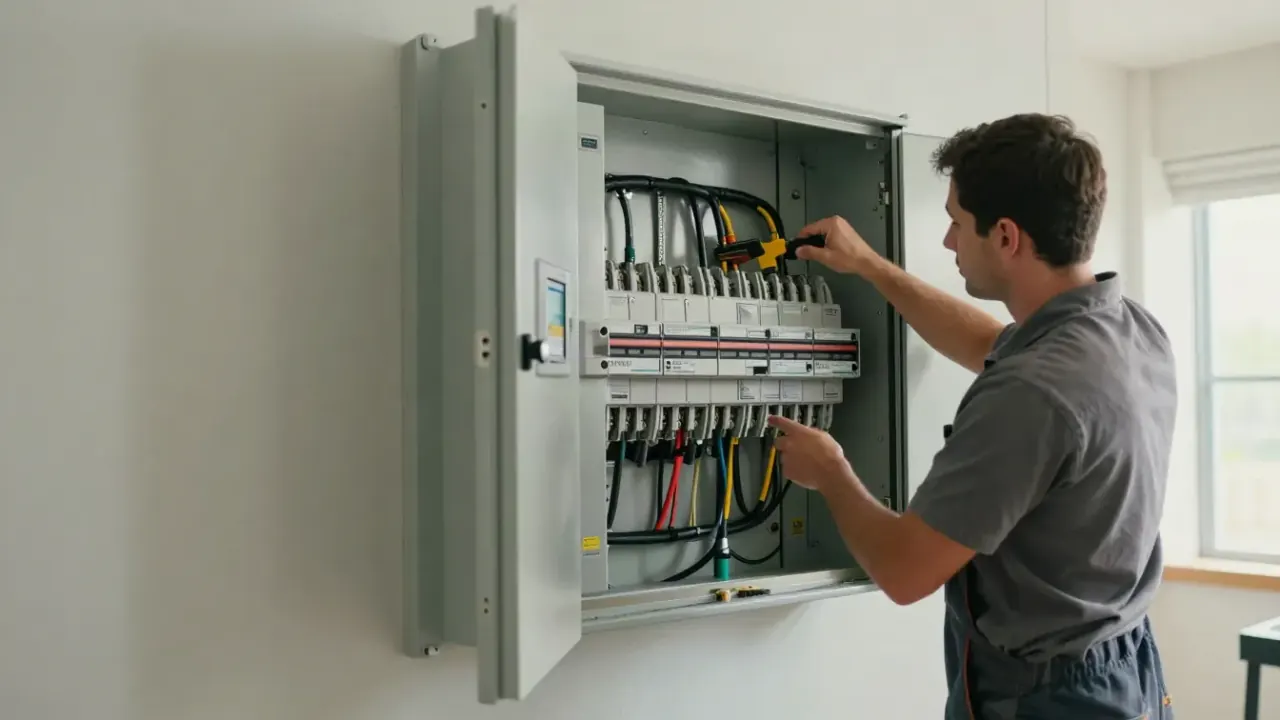
An electrical panel is the metal box that receives power from the utility and distributes it to every circuit in your house through individual breakers. It is the single point where your home's electrical load is managed, and when it's undersized or outdated, every circuit downstream pays the price. In Georgia, most homes built before 1990 were wired for 60-amp or 100-amp service - enough for lights and a refrigerator, not enough for a heat pump, an EV charger, and a tankless water heater running at the same time.
The panel also houses the main breaker, which is your emergency shutoff. If that breaker is weak, corroded, or double-tapped, you lose your first line of defense against an overload. That's why a panel inspection Woodstock GA is the fastest way to know whether your current setup is safe for how you actually live.
Sign 1: Your Breakers Trip Constantly
A breaker that trips once a year is normal. A breaker that trips every time you run the vacuum and the dryer together is telling you the circuit is overloaded or the breaker itself is failing. In Woodstock homes built in the 1980s and 1990s, we routinely find 15-amp breakers feeding circuits that now carry 20 amps of demand because of added outlets, ceiling fans, and home-office equipment.
Here's the rule of thumb: if you have to reset the same breaker more than twice a month, stop resetting it and start diagnosing it. Repeated tripping heats the breaker internally, and a hot breaker loses its trip curve - meaning it may stop protecting the circuit at all. That's when a small overload turns into a fire risk.
- Breaker trips when the AC starts - likely an undersized panel or a shared circuit.
- Breaker trips when you plug in a space heater - circuit is at capacity.
- Breaker won't reset at all - the breaker or the wiring behind it has failed.
Sign 2: Lights Flicker or Dim When Appliances Kick On
Lights that dim for a split second when the refrigerator compressor starts are a voltage-drop symptom, and in older Georgia homes it usually traces back to a panel that can't deliver stable current. A healthy 200-amp panel absorbs that inrush without your kitchen lights noticing. A 100-amp panel with a loose neutral or a corroded bus bar will let the whole house blink.
We see this constantly in neighborhoods like Towne Lake electrical panel upgrade territory, where large homes built in the 1990s still run original 100-amp service and have since added irrigation pumps, pool heaters, and EV chargers. If your lights flicker every time the well pump or the AC condenser starts, the panel is the first thing we check.
Sign 3: The Panel Is Warm, Buzzing, or Smells Burnt
A breaker panel should be cool and silent. If the cover feels warm, if you hear a low hum or crackle, or if you catch a burnt-plastic smell near the panel, shut off the main breaker and call an electrician the same day. Those three symptoms - heat, noise, and odor - are the classic signature of loose connections arcing inside the panel.
Arcing generates temperatures above 1,000°F at the connection point. It doesn't need a big load to start; a single loose lug on a 20-amp circuit is enough. This is the scenario behind most residential electrical fires in Woodstock, and it's why we treat a warm panel as an emergency, not a maintenance item.
Sign 4: You Still Have a Fuse Box
If your home still runs screw-in fuses or cartridge fuses instead of breakers, you're living with 1950s-era protection that was never designed for today's electrical load. Fuse boxes are common in the older pockets of Downtown Woodstock and along the Arnold Mill corridor, where homes from the 1940s through the 1960s still have original service equipment.
The problem isn't just age. Fuse boxes have no main breaker, no AFCI protection, and no capacity for modern circuits. Homeowners sometimes "fix" a blown fuse by inserting a penny behind it - a practice that has caused countless house fires. A fuse box replacement Woodstock brings you up to a modern breaker panel with proper overcurrent protection and room to grow.
Sign 5: Your Panel Is a 60-Amp or 100-Amp Unit
A 60-amp panel was standard in the 1950s. A 100-amp panel was standard in the 1970s. Neither is enough for a 2026 household running a heat pump, an induction range, a tankless water heater, and two EVs. The math is simple: a modern all-electric home pulls 150 to 180 amps at peak, and a 100-amp panel will either trip its main or slowly cook itself trying to keep up.
For most Woodstock homes, the right answer is a 200 amp service upgrade Woodstock, which doubles your capacity and gives you physical space for the circuits you'll add over the next decade. Typical 2026 pricing for a full 200-amp service upgrade in this area runs $2,200 to $4,500 depending on whether the meter base and service mast need replacement.
Sign 6: You're Adding an EV, Hot Tub, or Home Addition
Any new large load - a Level 2 EV charger, a hot tub, a pool pump, a workshop, or a finished basement - requires a load calculation before it can be added. A Level 2 EV charger alone draws 40 to 48 amps continuously, which is roughly half the capacity of an entire 100-amp panel. Adding one without upgrading is how homeowners end up with a main breaker that trips every night at 2 a.m. when the car starts charging.
We run a formal load calculation on every job before we quote, because the answer determines whether you need a full service upgrade or just a subpanel installation Woodstock GA to isolate the new load. In many Woodstock homes, a 100-amp subpanel in the garage handles the EV charger cleanly and costs far less than a full service change.
Sign 7: Rust, Scorch Marks, or Double-Tapped Breakers
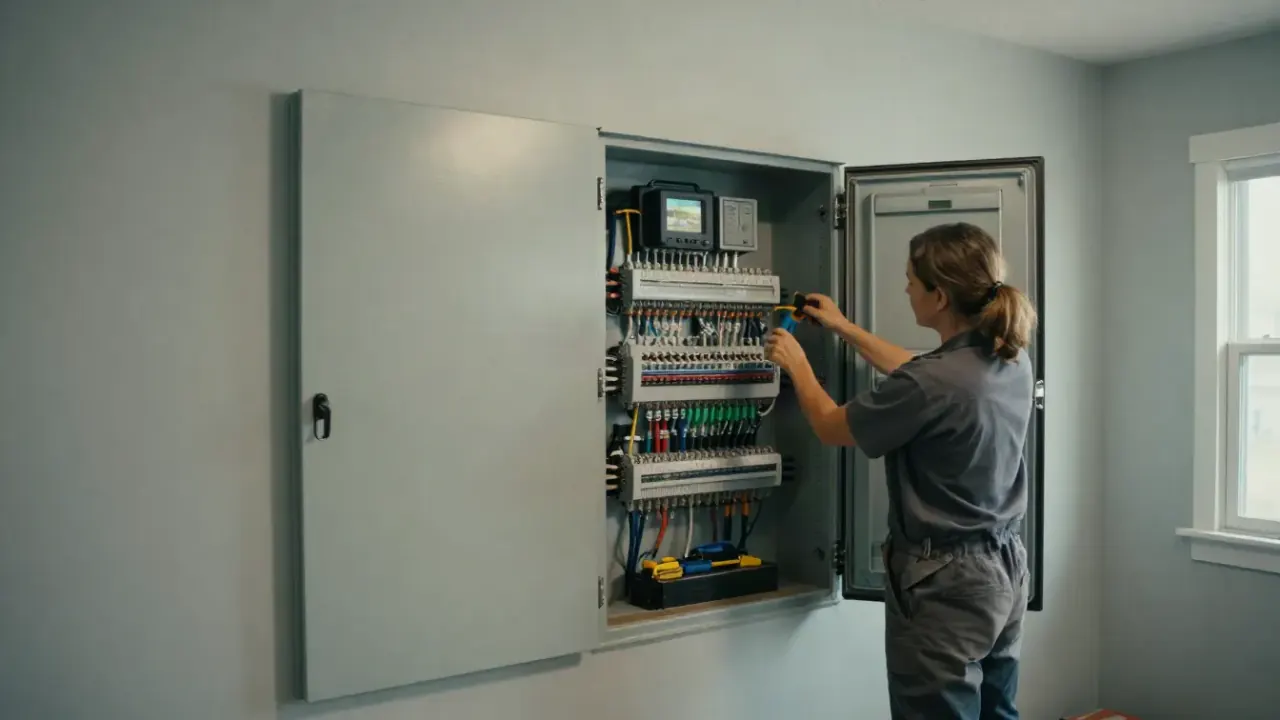
Open your panel door - carefully, with the main breaker off - and look for rust, white chalky residue, scorch marks around breakers, or two wires shoved under a single breaker lug. Any of those four things means the panel has already been compromised. Rust and residue point to moisture intrusion, which corrodes bus bars and creates high-resistance connections. Scorch marks mean arcing has already happened.
Double-tapped breakers are the most common defect we find in Woodstock homes that have had DIY electrical work. A breaker rated for one wire cannot safely hold two, and the second wire works loose over time. Every one of these conditions is a code violation under the National Electrical Code and a genuine fire hazard. If you see any of them, stop using that circuit and get an electrician out.
Common Mistakes Homeowners Make
The most expensive mistake we see is upgrading the panel without upgrading the service. Homeowners sometimes replace a 100-amp panel with a new 100-amp panel because it's cheaper, then wonder why the breakers still trip. The panel is only half the system - the service entrance, meter base, and mast have to match.
The second mistake is ignoring aluminum wiring. Homes built between 1965 and 1973 often have aluminum branch wiring, which requires special pigtails or CO/ALR-rated devices at every connection. Dropping a standard breaker panel onto aluminum wiring without addressing the connections is asking for trouble.
The third mistake is skipping the permit. In Cherokee County, electrical service upgrades require a permit and inspection. Unpermitted work can void your homeowner's insurance and create real problems at resale. We pull the permit, do the work, and meet the inspector - that's part of the job.
When to Call a Professional
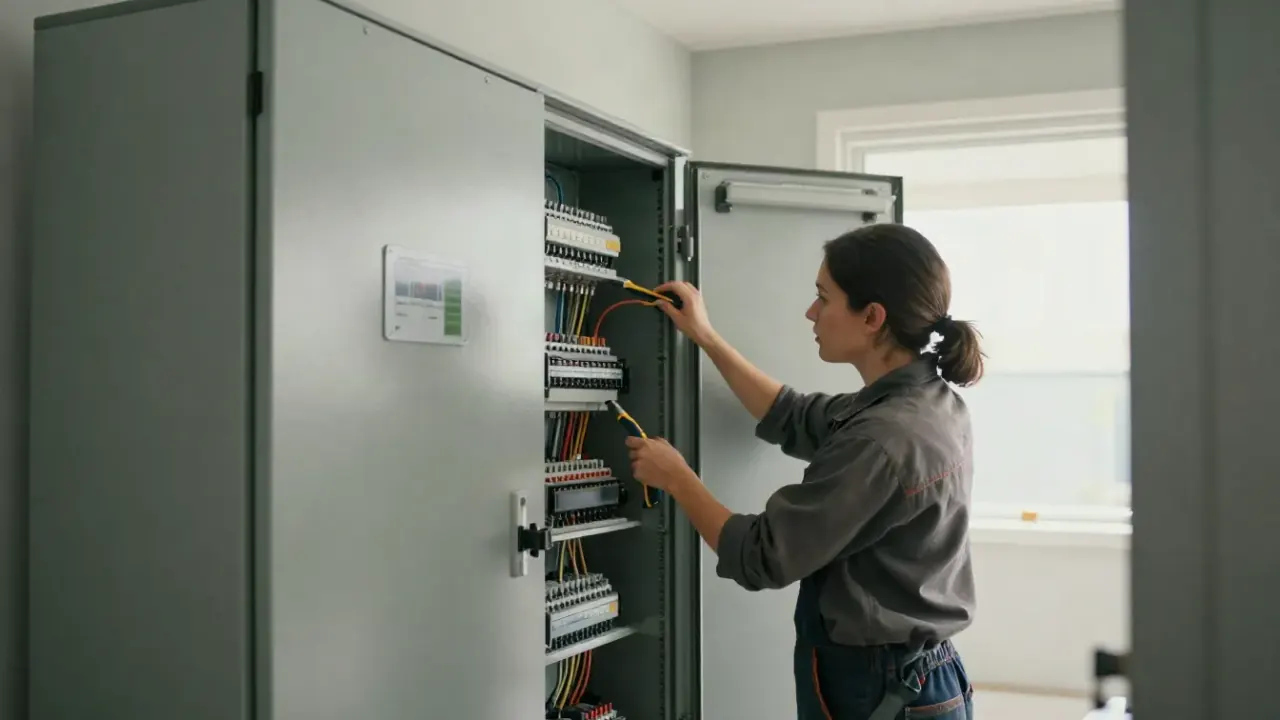
Call an electrician the same day if your panel is warm, buzzing, smells burnt, or shows scorch marks. Those are not wait-and-see symptoms. For everything else on this list - constant tripping, flickering lights, a fuse box, a 60-amp or 100-amp panel, or a new large load - call for an inspection and load calculation before you add anything else to the system.
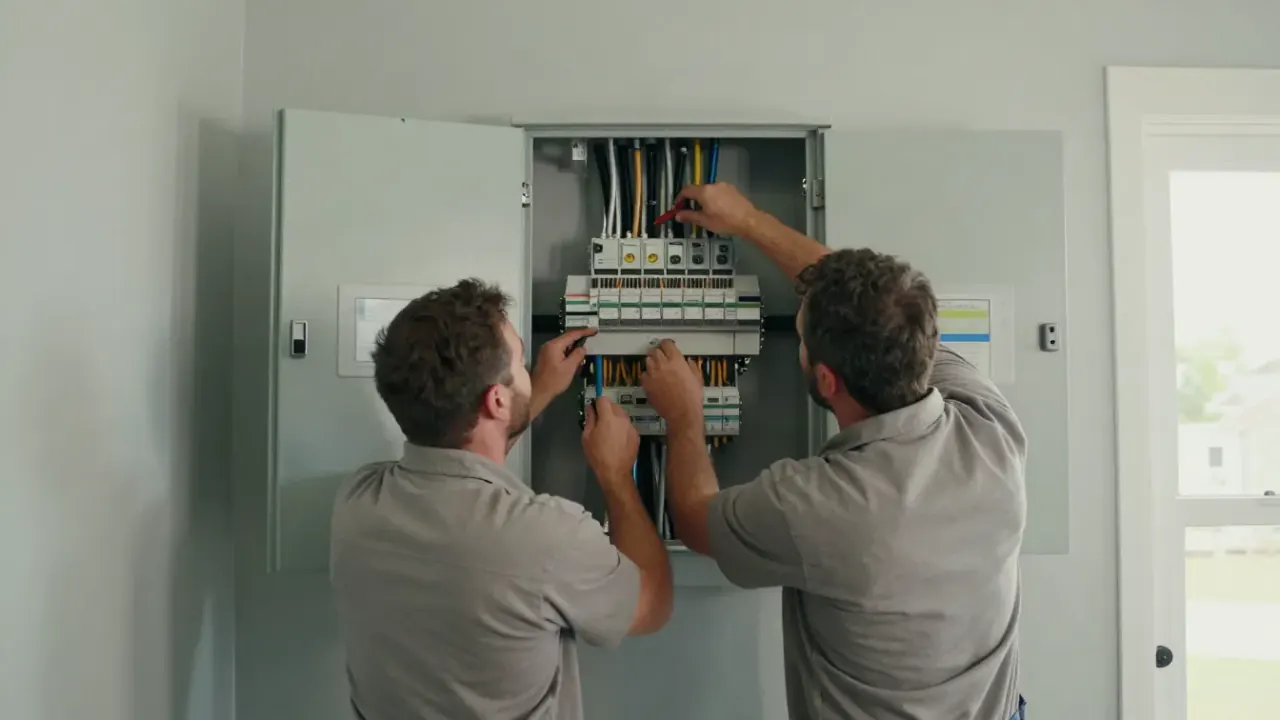
Woodstock Electrical Panel Upgrade handles panel replacements, service upgrades, fuse box conversions, and subpanel work across Woodstock and the surrounding Cherokee County area. We start every job with a load calculation, quote a fixed price before we touch anything, and leave you with a labeled panel and a passed inspection.
Frequently Asked Questions
What are the signs you need an electrical panel upgrade in Woodstock GA?
The main signs are breakers that trip more than twice a month, lights that dim when appliances start, a panel that is warm or buzzing, a fuse box instead of breakers, 60-amp or 100-amp service, and any plan to add an EV charger or hot tub. Rust or scorch marks inside the panel mean call today.
How do I know if my electrical panel is outdated in Georgia?
Check the main breaker rating and the brand. If it says 60 or 100 amps, or if the label lists a brand recalled for fire risk - Federal Pacific Stab-Lok and Zinsco are the two big ones - the panel is outdated. Anything installed before 1990 is worth inspecting.
Can a bad electrical panel cause a fire in Woodstock GA?
Yes. Loose connections, double-tapped breakers, and corroded bus bars cause arcing that reaches over 1,000°F and ignites nearby framing. A warm panel, burnt smell, or scorch marks are the warning signs. Shut off the main breaker and call an electrician immediately if you notice any of them.
Should I upgrade my fuse box in Woodstock Georgia?
Yes, if you still have one. Fuse boxes have no main breaker, no AFCI protection, and no capacity for modern loads. A fuse box to breaker panel conversion typically runs $1,800 to $3,200 in 2026 and brings your home up to current code with room for future circuits.
How long does an electrical panel upgrade take?
A standard 200-amp panel replacement takes one day, usually six to eight hours. If the meter base, service mast, or utility drop also needs replacement, plan on two days. We schedule the utility disconnect in advance so your power is only off for the working window.
Get Help with Electrical Panel Upgrade in Woodstock
If you recognized your home in any of these seven signs, don't wait for the next tripped breaker. We inspect, calculate the load, and give you a fixed price before any work starts.
Call Woodstock Electrical Panel Upgrade at (470) 742-0135 to schedule your panel inspection and get a straight answer about what your home actually needs.